

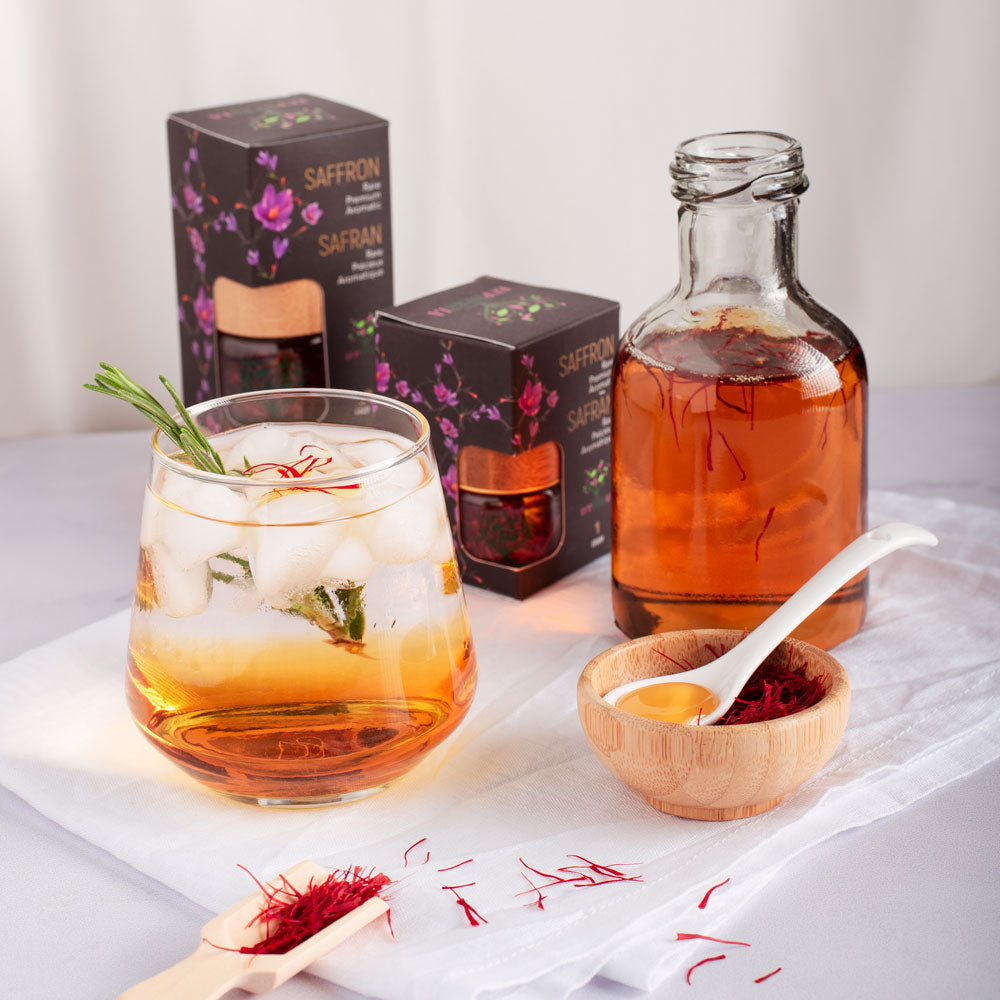
Perhaps the most valuable component of any kitchen is Saffron. Due to the painstaking process of obtaining this spice, every single red strand is valued as cooking gold.
Unlike certain other spices which require a rigorous toasting process, saffron is quite sensitive to heat. By subjecting it to excessive heat and thus destroying its intricate flavor profile, you will merely end up coloring your dish yellow.
In order to use saffron to its full potential, one must consider its exact threshold of heat resistance. Find out the chemistry behind heat damage to saffron, and learn how to cook with it without destroying the spice.
1. The Chemistry of Saffron: Meet Safranal
In order to explain the reason behind the heat destroying saffron, one must analyze its chemical composition. The saffron character is based on three major components:
- Crocin – responsible for providing the beautiful golden-red coloring.
- Picrocrocin – giving the earthy foundation flavor.
- Safranal – creating the pleasant, sweet and grassy fragrance.
Out of these three elements, safranal happens to be the most volatile one. Safranal is considered to be essential oil, and therefore it has very low boiling point. In case when saffron is cooked over high heat, the safranal does not stay in the pan but evaporates out. When cooking saffron over high heat, if you notice an extreme amount of fragrance being released into the air during the first several minutes of cooking, then it's actually not a good thing.
2. The Danger Zones: Temperatures to Avoid
To keep these delicate compounds intact, keep these specific culinary temperature rules in mind:

The Safe Zone: Under 140°F (60°C)
This is the best temperature range for blossoming and saffron extraction. Hot water, hot milk, and ice-melting procedures at room temperature are safe methods that fit in this temperature range. Here, the colors and flavors that dissolve easily in water do not cause the volatile oils to evaporate.
The Degradation Zone: 212°F (100°C)
This is the boiling point of water. Boiling your saffron strands in water for an extended time period, like when boiling them in the water used to cook your pasta or a broth that is boiling and frothy, will begin to boil away your safranal components quickly. Though the color (crocin) will survive this process because it is extremely heat-stable, all the complex flavors will be boiled away within 10-15 minutes.
The Destruction Zone: Greater Than 300°F (150°C)
It is caused by the action of tossing saffron into hot frying oil, high heat on the pan, or on a hot grill. This will remove the essence of the oil very quickly. It may even burn the fragile strands resulting in a bitter taste.
3. How to Master the Heat: The Golden Rules of Cooking
You do not need to eat saffron raw to enjoy it. You simply need to alter when and how you introduce it to heat.
Never throw dry threads directly into a hot cooking pot. Always grind the threads and bloom them in a small amount of warm (not boiling) liquid or over ice first. This creates an infused elixir that distributes evenly.
If adding your saffron elixir to a dish that is cooking on the stove, lower the flame to a gentle simmer. Never add it while the pot is at an aggressive, rolling boil.
For the absolute maximum flavor and aroma retention, stir your bloomed saffron elixir into your dish during the final 5 to 10 minutes of cooking. This gives the liquid just enough time to bind with the rice, sauce, or protein without over-exposing the volatile oils to heat.
3.Protecting Your Culinary Investments
Working with luxury spices requires a state of being present in the moment. By showing reverence for the heat tolerance of saffron, you elevate yourself from being just another amateur in the kitchen into a real connoisseur, making sure that nothing from your costly spice goes to waste.
In order to get the most out of each dish, using ingredients that have great strength is key. The best spice to ensure your dishes have the utmost flavor is Eupherbia Saffron. With high natural crocin content and volatile safranal, these pristine threads work best when exposed to heat slowly, creating a rich flavor in all your dishes.
Share:
The Science Behind Blooming Saffron with Ice Cubes
Why Squeezing Lemon Into Green Tea Multiplies Its Health Benefits by 5x?