

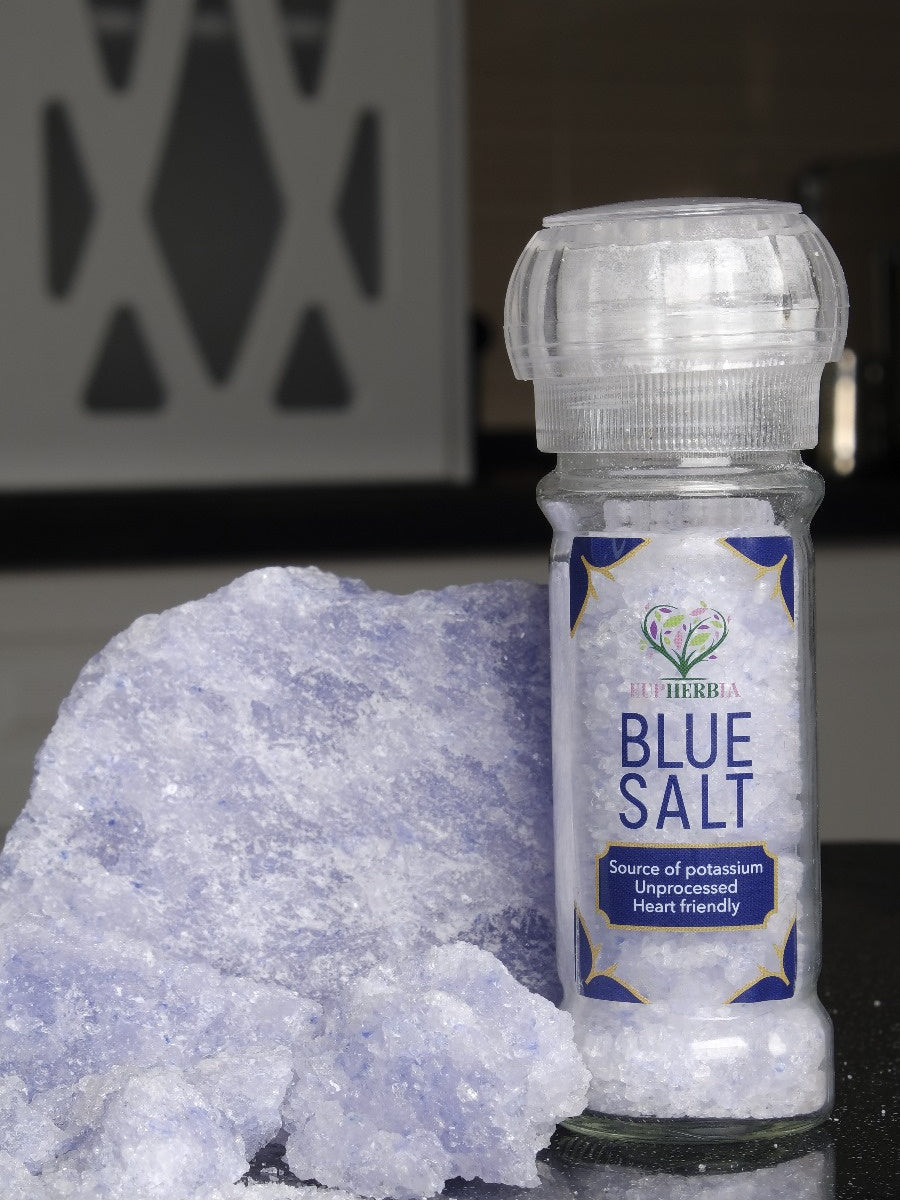
Every thought you think, every step you take and every beat of your heart starts with a tiny electrical signal. Those signals don't run on willpower alone. They run on minerals, and two of the most important ones, sodium and potassium, are found together in every crystal of blue salt.
We often hear that salt is something to cut back on. But your nervous system actually depends on the right balance of these minerals to send messages smoothly. So how does blue salt fit into the picture, and how can you use it in everyday life? Let's take a closer look.
How Does Your Nervous System Use Salt?
Your nerves talk to each other using electricity. To create that electricity, your body moves charged minerals, called electrolytes, in and out of your nerve cells.
Here's how it works in simple terms:
- Sodium sits mostly outside your cells. When a nerve fires, sodium rushes in and sparks the signal.
- Potassium sits mostly inside your cells. It flows back out to reset the nerve so it's ready to fire again.
- The sodium-potassium pump is a tiny "gate" in every cell that keeps these two minerals in balance. It works around the clock, and it's one of the biggest energy users in your body.
When sodium and potassium are in balance, signals travel smoothly from your brain to your muscles, heart and organs. When they're out of balance, you may notice it as muscle cramps, twitching, fatigue, brain fog or feeling lightheaded.
What Happens When Your Electrolytes Are Low?
You can lose electrolytes faster than you think. Sweating during exercise, hot weather, illness, drinking lots of plain water, caffeine and low-carb diets can all lower your levels.
Common signs that your electrolytes may need attention include:
- Muscle cramps or twitches
- Feeling tired or sluggish
- Headaches
- Dizziness when you stand up
- Trouble focusing
These signs can have many causes, so if they're frequent or severe, it's always best to check in with your doctor.

Why Blue Salt Is Different
Most table salt is refined down to almost pure sodium chloride, with anti-caking agents added to keep it flowing. Blue salt takes a different path.
- It naturally contains potassium. Blue salt gets its famous blue flecks from sylvinite, a potassium-rich mineral that formed deep in the earth over millions of years. That means you get sodium and potassium together, the same two minerals your nerves rely on.
- It's unprocessed. Blue salt is hand-mined and left in its natural state, with no bleaching or heavy refining.
- It has no additives. There are no anti-caking agents or fillers, just pure crystals.
- A little goes a long way. Blue salt has a bold first taste that softens into a mellow finish, so many people find they need less of it to season their food.
Blue salt isn't a supplement or a cure. But if you're already using salt every day, choosing one that naturally brings potassium along with sodium is a simple, everyday upgrade.
6 Everyday Ways to Use Blue Salt
Supporting your electrolyte balance doesn't have to be complicated. Here are some easy ways to bring blue salt into your daily routine.
1. Start Your Morning With Blue Salt Water
After a long night's sleep, your body wakes up a little dehydrated. Stir a small pinch of blue salt into a glass of warm water with a squeeze of lemon. It's a gentle way to rehydrate and start the day feeling fresh. Keep it to a pinch; this is about balance, not a salty drink.
2. Make a Simple Homemade Electrolyte Drink
Skip the sugary sports drinks. Mix a pinch of blue salt, a squeeze of lemon or orange and a teaspoon of honey into a bottle of water. It's perfect after a workout, a hot day or a long walk.
3. Season Balanced Meals
Your nervous system works best when you get potassium from food too. Sprinkle blue salt over potassium-rich foods like:
- Avocado toast
- Roasted sweet potatoes
- Leafy green salads
- Bananas with dark chocolate
- Beans, lentils and squash soups
4. Unwind With a Warm Blue Salt Bath
After a stressful day, a warm bath is one of the simplest ways to relax. Dissolve a handful of blue salt in your bath water, dim the lights and take 15 to 20 minutes for yourself. The warmth helps your muscles loosen and gives your mind a chance to slow down.
5. Soothe Your Throat With a Salt Water Gargle
A warm salt water gargle is a time-tested remedy for a scratchy throat during cold and flu season. Dissolve half a teaspoon of blue salt in a cup of warm water, gargle for 30 seconds and spit it out. Repeat a few times a day as needed.

6. Recharge After a Sweaty Day
When you sweat, you lose both sodium and potassium. After exercise, sauna sessions or working outside in the heat, a meal or drink seasoned with blue salt helps replace what you've lost.
How Much Blue Salt Is Enough?
More isn't better when it comes to salt. Health Canada recommends that most adults keep sodium under 2,300 mg a day, which is about one teaspoon of salt in total, including the salt already in packaged and restaurant foods.
The goal isn't to add more salt to your day. It's to make the salt you already use work better for you. Swapping refined table salt for blue salt, and using a pinch where you'd normally use a spoonful, is an easy place to start.
Who Should Be Careful With Blue Salt?
Blue salt is a food, and like any salt, it's best enjoyed in moderation. Talk to your doctor before changing your salt habits if you:
- Have high blood pressure or heart disease
- Have kidney disease
- Take medications that affect potassium, such as some blood pressure pills or diuretics
- Have been told to follow a low-sodium or low-potassium diet
- Are pregnant or breastfeeding
Frequently Asked Questions
Can blue salt calm my nerves? Blue salt isn't a treatment for stress or anxiety. It provides sodium and potassium, two minerals your nervous system needs to send signals. Relaxing rituals like a warm blue salt bath can be part of a calming routine.
Is blue salt good for muscle cramps? Cramps can happen when electrolytes run low, especially after sweating. Replacing sodium and potassium with food and drinks seasoned with blue salt may help. If cramps keep coming back, see your doctor.
Can I drink blue salt water every day? A small pinch in a glass of water is fine for most healthy adults. Count it as part of your daily sodium.
Does blue salt have more potassium than table salt? Yes. Table salt is almost pure sodium chloride, while blue salt naturally contains potassium from the mineral sylvinite. It's still mostly sodium chloride, so it's a complement to a potassium-rich diet, not a replacement.
Support Your Balance With Eupherbia Blue Salt
Your nervous system works hard every second of the day. Giving it the right minerals is one small, simple way to support it.
Eupherbia Blue Salt is:
- A natural source of potassium
- Raw and unprocessed
- Free from anti-caking agents and additives
- Bold in flavour, so a little goes a long way
A pinch in your morning water, a sprinkle on your dinner, a handful in your bath. Small rituals, every day.
Discover Eupherbia Blue Salt and bring a naturally balanced touch to your daily routine.
Disclaimer: This article is for informational purposes only and is not medical advice. If you have high blood pressure, kidney disease, or another medical condition, or take medication, talk to your doctor before changing your salt intake or using potassium-rich salts. Eupherbia Blue Salt is a food product and is not intended to diagnose, treat, cure, or prevent any disease.
Share:
Is Blue Salt Healthier Than Regular Salt?
Is Blue Salt Safe During Pregnancy? Benefits, Risks and How Much Is Safe