

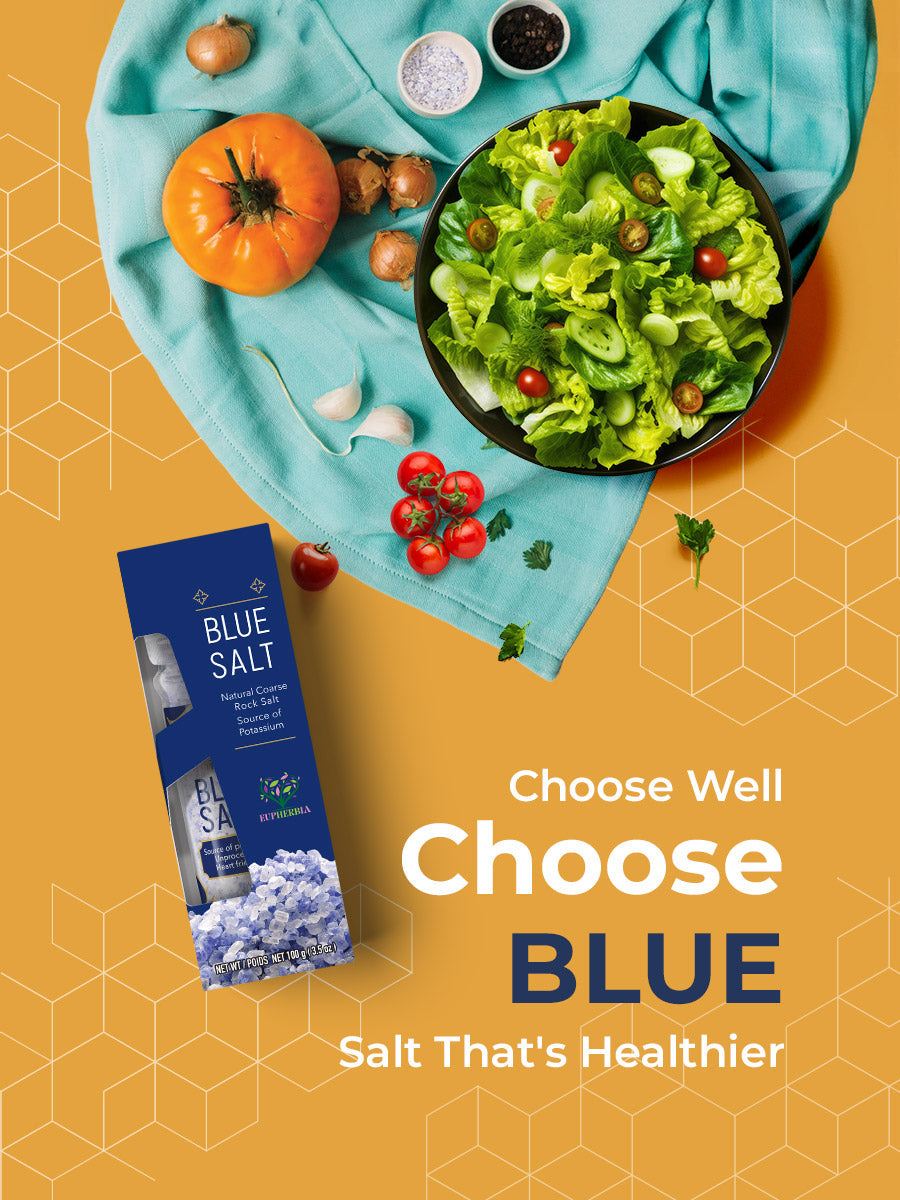
Celtic salt has long been the star of the wellness scene, known for its moisturizing properties and mineral content. But if you seek the true "jewel" of your spice rack, you will need to learn more about Blue Salt.
Why Blue Salt Takes the Gold (and the Blue)
1. Superior Mineral Profile (The Potassium Powerhouse)
While Celtic salt is known for its magnesium, Blue Salt is one of the world’s richest sources of potassium.
-
The Difference: Blue Salt has much more potassium chloride than regular salt. This is because it is the potassium chloride that makes the salt blue due to how light bends through its crystals.
-
Benefit: Potassium is required for proper heart and muscle function, as well as maintaining the body's fluid balance. People interested in balancing their sodium and potassium levels will benefit from the potassium content found in Blue Salt.
2. Naturally Lower in Sodium
If you’re keeping an eye on your salt consumption, Blue Salt is definitely the better option. Thanks to the dense amount of minerals in it, especially the sylvinite part, Blue Salt has roughly 30% less sodium compared to normal table salt and even sea salt.

3. Absolute Purity (Zero Microplastics)
This is the biggest "win" over Celtic and other sea salts. Celtic salt is harvested from modern ocean waters, which, despite the best filtration, are increasingly contaminated with microplastics and heavy metals.
-
Blue Salt is a fossil salt that has been around for millions of years, well before any industrial pollution or plastic even existed. Blue Salt is mined deep inside the Earth, which makes it one of the purest things you can consume.
4. A Texture and Taste for Foodies
The Celtic sea salt is very damp, which makes it difficult to grind or season with. The Blue Salt is naturally dry. It provides the consumer with instant saltiness. It is the perfect finishing salt, especially when used with prime meat, seafood, and chocolate.
| Feature | Celtic Sea Salt | Persian Blue Salt |
| Origin | Modern Ocean Water | Ancient Fossil Mines |
| Primary Mineral | Magnesium | Potassium |
| Sodium Content | Standard | Naturally Lower |
| Purity | Risk of Microplastics | Microplastic-Free |
| Best Use | Cooking/Hydration | Gourmet Finishing/Heart Health |
Eupherbia’s Blue Salt
With this particular rare mineral salt, the Blue Salt designation may be somewhat misleading in certain cases. The Blue Salt from Eupherbia is especially notable for being tested independently in various laboratories. Eupherbia makes use of a very sophisticated ICP-MS analysis technique to construct what they call a “fingerprint” of their salt, proving that the blueness comes naturally from mineral refraction rather than being artificially added by coloring.
Share:
Blue Salt Benefits and Side Effects
How to use Blue Salt in Cooking?