

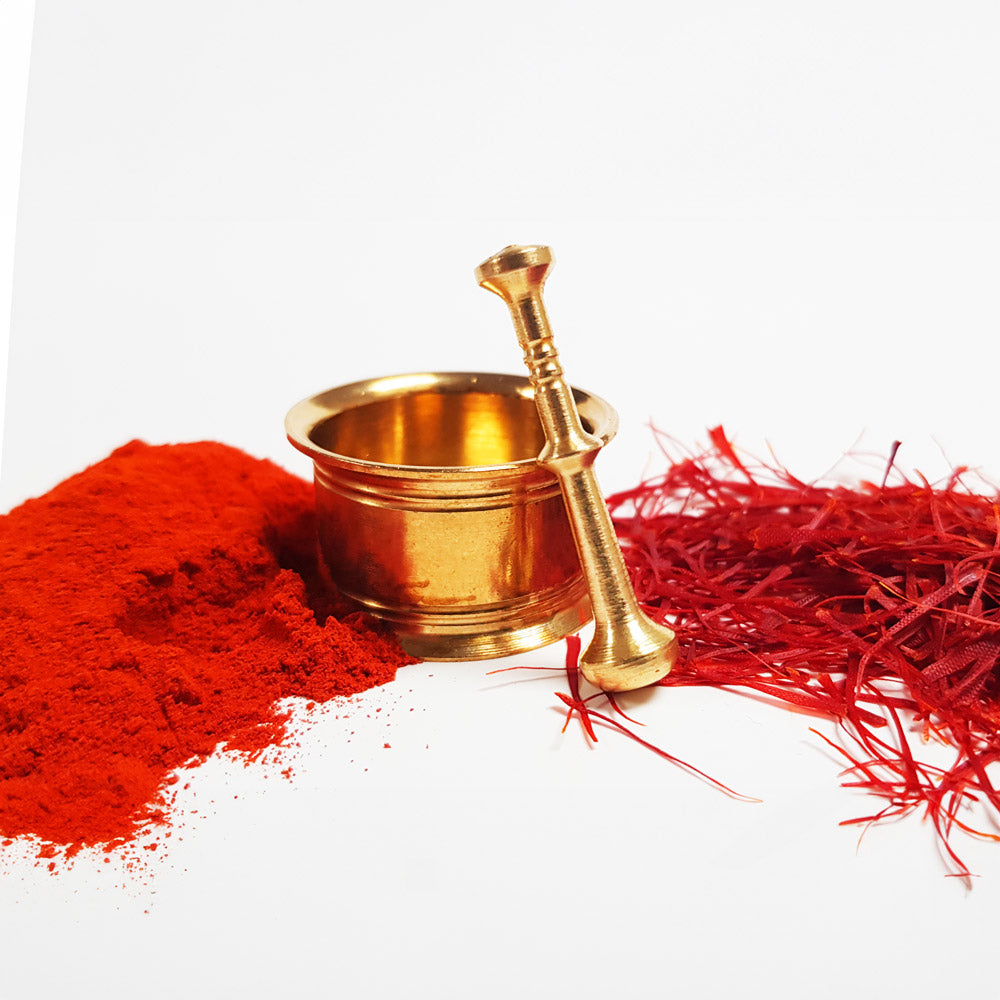
Saffron has a way of making people nervous. It's expensive, it's delicate, and a little goes a long way, so it's easy to feel like you're one wrong move away from wasting the priciest thing in your spice drawer.
The good news: saffron isn't fussy once you understand it. Most "saffron fails" come down to a handful of simple habits. Fix those, and you'll get the deep color, honeyed aroma, and subtle floral flavor that make it worth the price.
Here are the mistakes that trip people up most often.
Tossing it in dry
This is the big one. Saffron's flavor and color live inside the threads, and they need moisture and time to come out. Drop dry threads straight into a dish and you'll get most of the cost with little of the payoff.
Instead, bloom it first: soak the threads in a few tablespoons of warm (not boiling) water, milk, or broth for 10 to 20 minutes, then add the liquid and threads together. You'll see the water turn a rich gold, that's the flavor you almost left behind.

Using too much
More saffron doesn't mean more flavor. Past a certain point it turns bitter, even medicinal. A pinch genuinely is enough.
As a rough guide:
- A pinch (about 15 to 20 threads) flavors a dish for 4 people
- Crushing the threads lightly before blooming helps them release more with less
- When in doubt, use less, you can always steep a little extra and add it in
Cooking it too hard, too fast
High, prolonged heat dulls saffron's aroma. If you boil it aggressively for an hour, much of that delicate fragrance simply cooks off.
Add bloomed saffron toward the middle or end of cooking rather than the very start, and keep things at a gentle simmer when you can.
Buying the wrong thing
Plenty of "saffron" on the market is dyed corn silk, safflower, or simply padded with the yellow parts of the thread that carry far less flavor. A few quick checks help:
- Look for deep red threads with tips that flare slightly like a trumpet, not yellow or orange ones
- Real saffron colors water slowly, fakes often bleed color almost instantly
- The aroma is floral and honeyed, never sharp or chemical
Storing it carelessly
Light, heat, and air are saffron's enemies. Left in a sunny spot or an open jar, it fades fast.
Keep it in an airtight container somewhere cool and dark, and it'll hold its character for a couple of years.
The bottom line
Saffron rewards a little patience more than any special skill. Bloom it, use a restrained hand, treat it gently on the heat, and store it well, do that, and even a tiny pinch will quietly transform a whole pot.
Start with saffron worth blooming. Eupherbia Saffron offers pure, deep red threads in convenient 1 gram and 3 gram sizes, perfect whether you're trying it for the first time or stocking your kitchen for the long run. Treat your next dish to the real thing.
Share:
How Black Tea Helps with Mental Health
Common mistakes people make while brewing Tea