

Over the past couple of years, the world of wellness influences and gourmet cooking has been going wild about Celtic sea salt. Renowned by its unique gray color, wet texture, and abundant mineral profile.
However, in a world where culinary trends evolve rather quickly, health-focused foodies are now turning their attention to an entirely new crystal: blue rock salt.
Despite the success that Celtic sea salt enjoyed, food enthusiasts are now migrating from the gray to sapphire crystals. This is the reason why wellness lovers prefer this new type of salt.
1. Zero Microplastics: Rock Salt originated from Mountains vs. Modern Oceans
Purity is the prime reason for this food trend to take off.

Celtic sea salt is mined through coastal pools that are allowed to evaporate. While the process to mine such salt is picturesque in itself, it is impossible to ignore the facts of modern ocean pollution. Recent research studies have proven that more than 95% of all sea salts available in the market today include tiny pieces of microplastics.
Contrastingly, natural blue rock salt has no traces of any such impurities at all. Unlike Celtic salt, which is extracted from the oceans that exist currently, blue rock salt is collected by mining ancient located millions of years ago and buried within the mountains.
2. The Power of Potassium: A Natural Sodium Counter-Balance
Even though Celtic salt is often celebrated due to its richness in magnesium, blue rock salt offers a totally new cardiovascular heavy hitter in the form of potassium.
The sapphire color of blue salt is not created by any additive or synthetic coloring but is achieved by the formation of the crystal structure of salt under immense tectonic pressure in combination with the presence of minerals rich in potassium.
- Potassium Benefits: The majority of contemporary diets include excessive amounts of sodium and lack potassium, which may cause problems with one's blood pressure and cardiovascular system.
- Difference in Minerals: Thanks to its abundant supply of potassium, blue rock salt will help you intake less sodium compared to conventional sea salt.
3. Texture and Kitchen Performance
This salt has one characteristic that can also become a big drawback – moisture. Indeed, moisture in the salt causes it to clump and not grind smoothly in conventional salt grinders, as well as poorly dissolve on the foods.
- It perfectly grinds even in expensive ceramic salt grinders, not clogging the process.
- It has a strong taste of salt that gradually turns into a pleasant sweet aftertaste.
- As an ingredient for finishing salty dishes, it will add an interesting "crunching effect" when consumed with steak, fish, or fresh vegetables.
What to Look For: The Premium Standard
The time has now come to start using this exceptionally pure product. Since authentic blue salt is one of the rarest products in the world, you will need to make sure that what you get holds up to its standards.
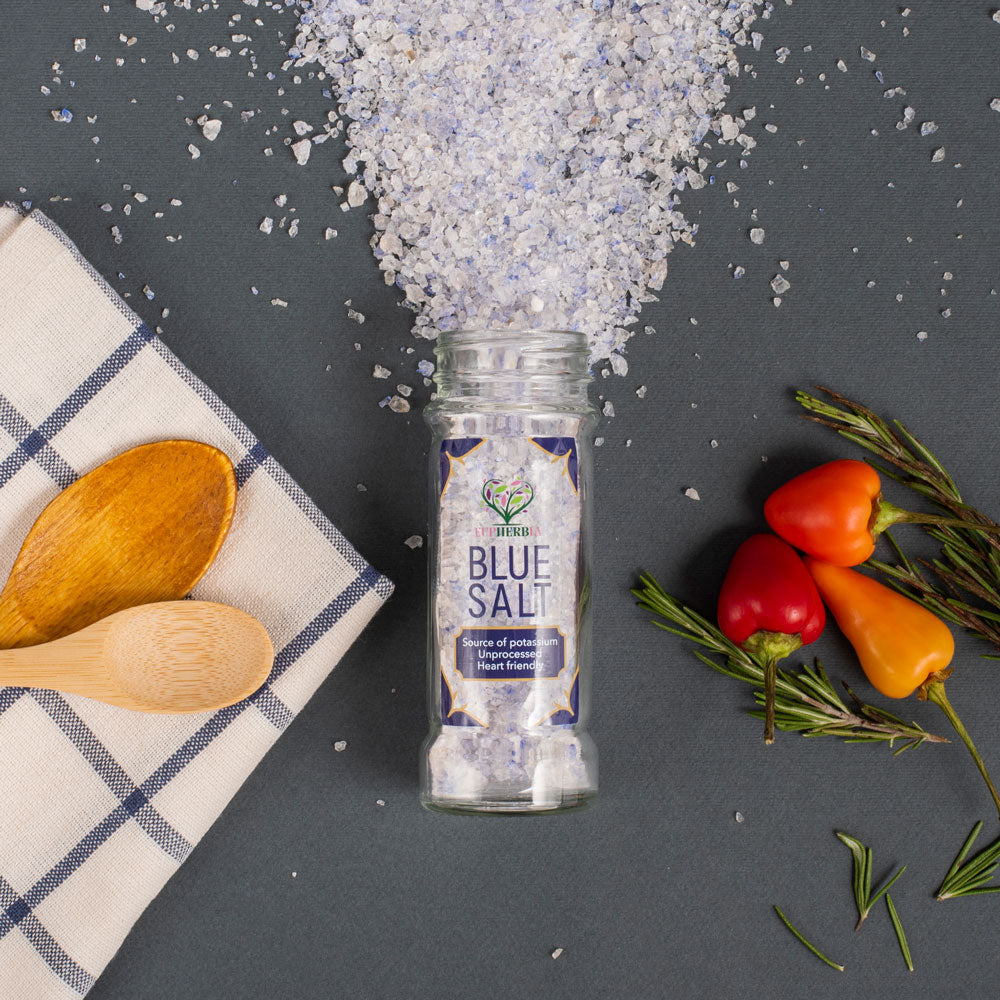
If purity, authenticity, and nutritional value mean everything to you, then you should consider going for Eupherbia Blue Salt. With this high-quality sustainably-sourced product, you will never have to worry about having microplastics in your home, while your guests will be delighted by an exotic piece of sapphire crystal filled with beneficial potassium.
Share:
How saffron helps with your physical health?
The Hydration and Electrolyte Advantage of Blue Rock Salt for Athletes