

That mid-afternoon energy crash. The sugar cravings that hit after lunch. A doctor mentioning the word "prediabetes" at your last check-up. Blood sugar affects how we feel every single day, and millions of Canadians are looking for simple ways to keep it in balance.
Green tea has been enjoyed for thousands of years, and today it's one of the most studied drinks in the world. Researchers have looked closely at whether a daily cup can help with blood sugar, and the results are worth knowing about.
In this guide, we'll explain how green tea works, what the research actually shows, and how to enjoy it as part of a blood sugar-friendly routine.
Blood Sugar Basics
When you eat, your body breaks carbohydrates down into glucose, a sugar that fuels your cells. Insulin, a hormone made by your pancreas, acts like a key that lets glucose move from your blood into your cells.
Problems start when your cells stop responding well to insulin. This is called insulin resistance. Glucose builds up in your blood, which can lead to prediabetes and, over time, type 2 diabetes.
Doctors usually track blood sugar with two tests:
- Fasting blood glucose measures your blood sugar after not eating for at least 8 hours.
- HbA1c shows your average blood sugar over the past 2 to 3 months.
How Might Green Tea Help?
Green tea is rich in natural plant compounds called catechins. The most powerful one is EGCG (epigallocatechin gallate). Because green tea leaves are steamed or pan-fired rather than fully oxidized, they keep more of these catechins than black tea.

Researchers believe green tea's catechins may:
- Improve insulin sensitivity, helping insulin work more effectively
- Slow carbohydrate digestion, so sugar enters the blood more gradually
- Reduce glucose production in the liver
- Fight oxidative stress and inflammation, which are linked to insulin resistance
- Support a healthy weight, which plays a big role in blood sugar control (read more in our guide Green Tea for Weight Loss: How Much Should You Drink?)
What Does the Research Show?
Tea Drinkers May Have a Lower Risk of Type 2 Diabetes
Large population studies have followed tea drinkers for years to see who develops diabetes.
- A Japanese study of 17,413 adults followed for 5 years found that people who drank 6 or more cups of green tea a day had a 33% lower risk of developing type 2 diabetes than those who drank less than 1 cup a week.
- A large review of 16 studies with more than 545,000 people found that tea drinkers had a lower risk of type 2 diabetes. Every 2 extra cups a day was linked to a 4.6% lower risk, and people drinking 4 or more cups a day had about a 15% lower risk.
These studies show a link, not proof that tea prevents diabetes. Tea drinkers may also have other healthy habits.
Green Tea and Fasting Blood Sugar
Clinical trials give people green tea or a placebo and measure the results.
- A 2013 review of 17 trials with 1,133 people found that green tea lowered fasting blood glucose and HbA1c, and improved fasting insulin in the higher-quality studies.
- A 2020 review of 27 trials with 2,194 people confirmed that green tea lowered fasting blood glucose. However, it didn't find a significant change in HbA1c or insulin.
What Does That Mean in Real Life?
The improvements in these studies were real but small. For example, the 2013 review found fasting blood sugar dropped by about 0.09 mmol/L on average. That's helpful as part of a healthy lifestyle, but it's not enough to replace diet, exercise or medication.
The Bottom Line on the Research
- Diabetes risk: regular tea drinkers tend to have a lower risk of type 2 diabetes.
- Fasting blood sugar: green tea consistently lowers it slightly.
- Long-term blood sugar (HbA1c): the results are mixed.
- More long-term studies are needed, as many trials lasted only a few weeks or months.
How to Drink Green Tea for Blood Sugar Balance
How Many Cups a Day?
Most studies looked at 2 to 4 cups of green tea a day, and the biggest population benefits appeared at 4 or more cups. For most healthy adults, 2 to 4 cups a day is a comfortable, sustainable amount.
Keep It Unsweetened
This is the most important tip. Adding sugar, syrups or sweetened milk can cancel out the benefits. If you want a touch of sweetness, try:
- A squeeze of lemon, which may also help your body absorb more catechins (read Why Squeezing Lemon Into Green Tea Multiplies Its Health Benefits)
- A slice of fresh ginger
- A cinnamon stick
- A few saffron threads for a naturally sweet, floral note
Drink It With or After Meals
Sipping green tea with or after a meal is a smart way to enjoy it. It replaces sugary drinks and may help slow how quickly your body absorbs carbohydrates.

Brew It the Right Way
To get the most catechins and the least bitterness:
- Use water at 75 to 85°C, not boiling
- Steep for 2 to 3 minutes
- Choose whole-leaf tea, which holds more natural compounds than dust-filled tea bags
Pair It With Blood Sugar-Friendly Habits
Green tea works best as part of a healthy lifestyle:
- Eat more fibre, vegetables, legumes and whole grains
- Take a 10 to 15 minute walk after meals
- Sleep 7 to 9 hours a night
- Keep up with check-ups and blood tests
Is Green Tea Safe? Side Effects to Know
Green tea is safe for most people in normal amounts. Keep these points in mind:
- Caffeine. A cup of green tea has about 30 to 50 mg of caffeine. Too much can cause jitters, a racing heart or trouble sleeping. Health Canada advises most adults to stay under 400 mg of caffeine a day from all sources.
- Iron absorption. Green tea can reduce how much iron your body absorbs from plant foods. Drink it between meals if you have low iron.
- Upset stomach. Some people feel queasy drinking green tea on an empty stomach.
- Green tea extract supplements. Highly concentrated extracts have been linked to rare cases of liver problems. Brewed green tea is a much gentler choice.
Who Should Talk to Their Doctor First?
Check with your doctor before drinking several cups of green tea a day if you:
- Take diabetes medication or insulin. Green tea may add to the blood sugar-lowering effect, so your levels should be monitored.
- Take blood thinners, such as warfarin
- Take medication for blood pressure or heart conditions
- Have low iron or anemia
- Are pregnant or breastfeeding, as caffeine limits are lower
- Have liver problems
Most importantly, green tea is not a treatment for diabetes. Never stop or change your medication without talking to your doctor.
Frequently Asked Questions
Does green tea lower blood sugar? Research shows green tea can slightly lower fasting blood sugar. The effect is modest, so it works best alongside a healthy diet and active lifestyle.
Can green tea prevent type 2 diabetes? Large studies link regular tea drinking to a lower risk of type 2 diabetes, but they can't prove tea is the cause. It's one healthy habit among many.
Can people with diabetes drink green tea? Yes, unsweetened green tea is a great drink choice for most people with diabetes. If you take diabetes medication, check with your doctor and monitor your levels.
What's the best time to drink green tea for blood sugar? With or after meals is a smart choice. Avoid it late in the day if caffeine affects your sleep, since poor sleep can also raise blood sugar.
Is green tea or black tea better for blood sugar? Both contain beneficial compounds, and tea drinkers in general have a lower diabetes risk. Green tea has the most research for blood sugar because it keeps more catechins.
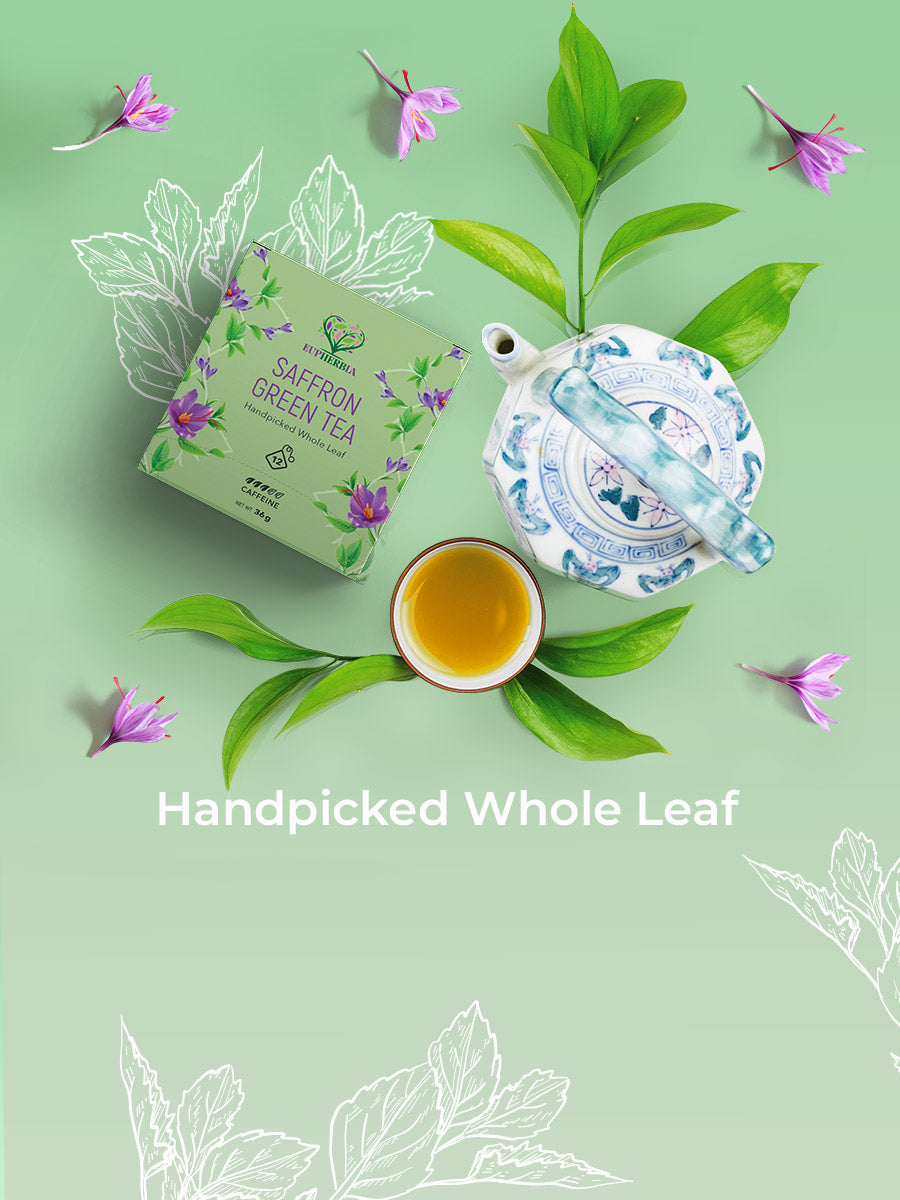
Make Every Cup Count With Eupherbia Saffron Green Tea
Balancing your blood sugar is about small, steady choices, and a warm cup of green tea is one of the easiest. Eupherbia Saffron Green Tea is:
- Made with handpicked whole-leaf green tea, rich in natural catechins
- Infused with real saffron for a golden colour and gentle floral flavour
- Naturally flavourful, so you won't miss the sugar
- Packed in pyramid tea bags that give the leaves room to unfold
Swap your afternoon soda or sweetened coffee for a golden cup of Eupherbia Saffron Green Tea today.
Disclaimer: This article is for informational purposes only and is not medical advice. Green tea is not a treatment for diabetes or prediabetes. If you have diabetes, take medication, or have another medical condition, talk to your doctor before making changes to your diet. Eupherbia teas are food products and are not intended to diagnose, treat, cure, or prevent any disease.
Share:
Saffron for Memory and Brain Health as You Age
Does Tea Stain Your Teeth? How to Enjoy Tea and Keep Your Smile Bright