

Green tea has long been called "good for digestion." There's real research behind that, though most of it, so far, comes from animal studies rather than humans.
How Green Tea Reaches Your Gut Bacteria
Much of the good stuff in green tea (called catechins) isn't fully absorbed early on. A lot of it travels down into your gut, where it meets your gut bacteria.
This creates a two-way relationship:
- Your gut bacteria break the catechins into smaller pieces, some more active than the original.
- At the same time, green tea changes which bacteria grow and thrive in your gut.
So your gut changes the tea, and the tea changes your gut.
It Seems to Favour "Good" Bacteria
Lab studies show a consistent pattern:
- Green tea holds back several bacteria groups.
- One helpful group, Lactobacillus, is left alone or even encouraged to grow.
Lactobacillus is generally considered one of the "good guy" bacteria linked to a healthy gut.
Animal studies add more detail. In one mouse study, green tea:
- Increased a specific bacteria linked to a healthy gut lining
- Boosted a compound called butyrate, basically fuel for the cells lining your colon
It May Help Calm Gut Inflammation
In mice with gut inflammation (similar to colitis), green tea's main compound (EGCG) reduced inflammation and strengthened the gut lining.
One key detail: this only worked when the mice drank it, not when applied directly to the gut. That suggests gut bacteria need to process it first for the benefit to show up.

Researchers pushed this further. They transferred gut bacteria from tea-treated mice into other mice. Those mice also had better gut health, even though they never drank tea themselves. That's fairly strong evidence the gut bacteria changes are doing real work.
Possible Links to Blood Sugar and Weight
Green tea is already known to help with blood sugar and metabolism. New research suggests part of that may run through gut bacteria too.
In one study on diabetic mice:
- Green tea lowered blood sugar
- This was closely tied to specific shifts in gut bacteria groups
Other studies found green tea changed gut-related processes in ways linked to:
- Fewer calories absorbed
- More vitamin production
- Lower fat-related compounds in the blood
Some researchers now think green tea's benefits for weight and blood sugar may partly work through these gut changes, not as separate effects.
Where the Evidence Gets Weaker
Almost all of this comes from mice, rats, or lab experiments, not humans.
Human studies are still limited. One study got closer to human relevance by using a lab model of the human colon with samples from people with metabolic syndrome. That's progress, but still not a full human trial over time.
So this is a promising, well-supported idea in animals, not yet a proven fact in people.
Practical Takeaways
- Most research is based on regular brewed tea, not concentrated EGCG supplements, the two may not act the same way in your gut.
- Gut changes need consistent, long-term intake, one cup won't do much.
- This may help explain why green tea seems to help with so many things at once, weight, blood sugar, and inflammation may all be tied to the same gut changes.
Bottom Line
Green tea appears to genuinely reshape gut bacteria in a positive direction. The evidence is strong in animals and makes good scientific sense, but solid human proof is still catching up. For now, it's a good reason to feel good about your daily cup, just not a guaranteed fix for gut issues.
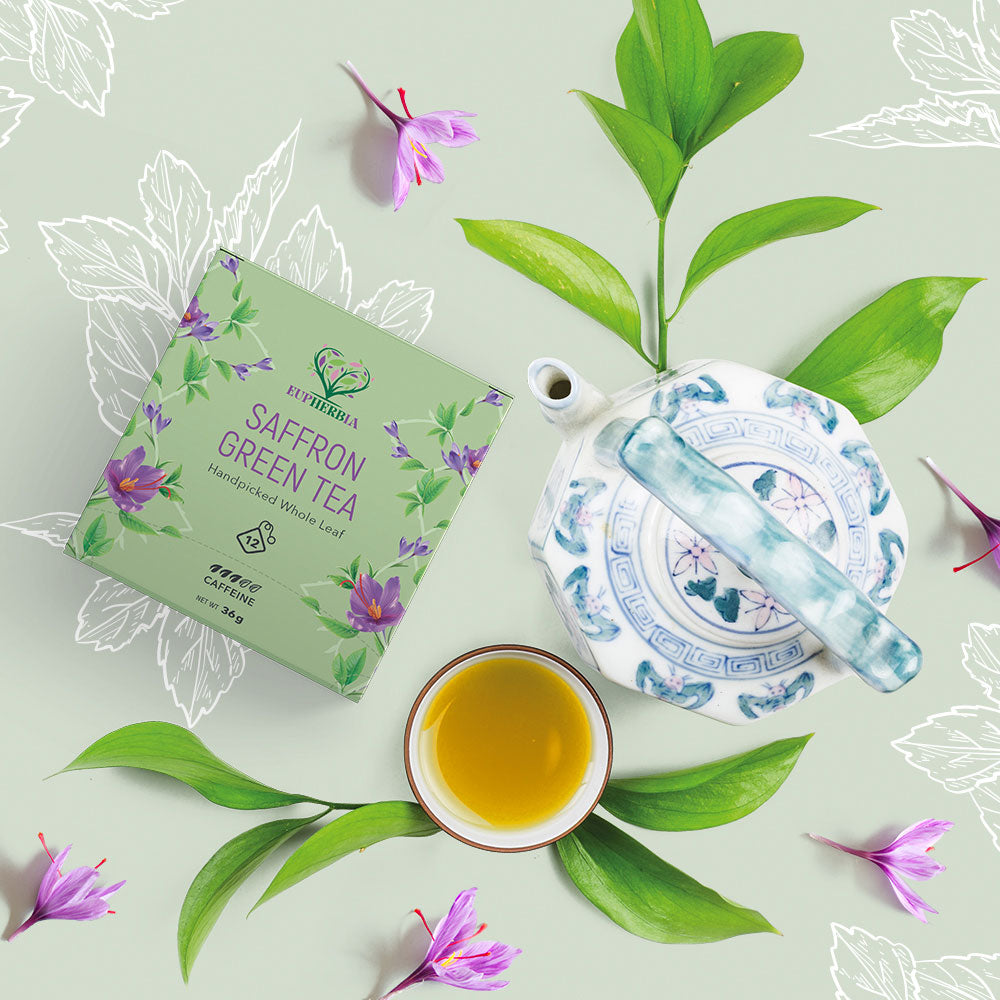
Try Eupherbia Saffron Green Tea, a soothing blend of premium hand-picked green tea and hand-picked saffron threads, crafted for a daily ritual that's as calming as it is good for you. Sip your way to a happier gut, one cup at a time.
Share:
Saffron for PMS and Mood: What the Research Actually Shows
Saffron Threads vs. Powder: Which Should You Buy?