

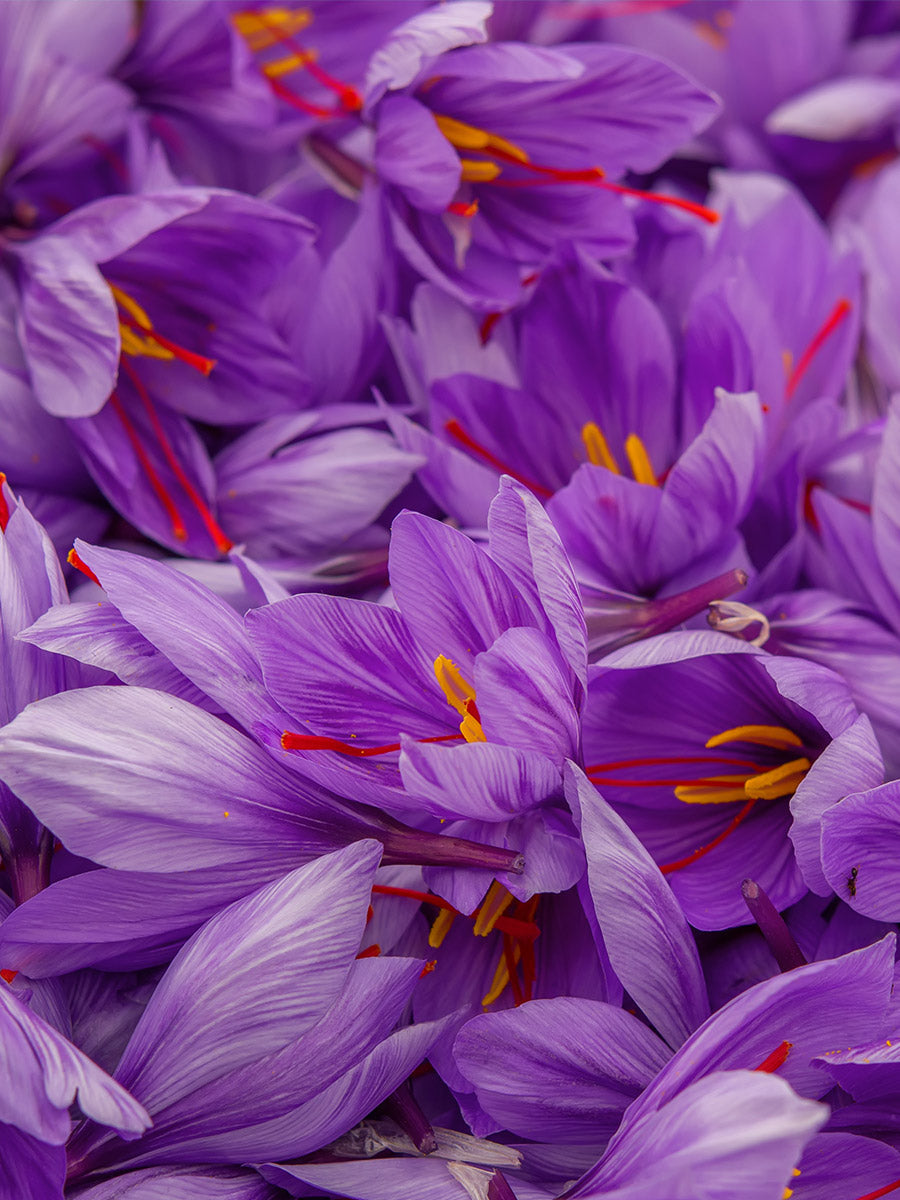
For thousands of years, saffron has been prized as a spice, a dye, and a remedy for "PMS" and low spirits alike. In the last two decades, that Saffron has attracted real scientific attention. Here's an honest look at what the studies actually found, and where the evidence is still thin.
Why Saffron, Specifically?
Saffron comes from the dried stigmas of Crocus sativus. Its bioactive compounds, crocin, crocetin, picrocrocin, and safranal, are the focus of most research.
These compounds have antioxidant properties. They also appear to influence serotonin activity in the brain. That's part of why researchers got curious about saffron as a mood intervention in the first place.
What the PMS Research Shows
Premenstrual syndrome affects a large share of women during their reproductive years. A meta-analysis pooling PMS trials found saffron had a moderate-to-large positive effect on PMS symptoms. It also helped reduce menstrual cramping (dysmenorrhea).
A few individual trials stand out:
- One randomized, triple-blind study gave university-aged women 30 mg of dried saffron extract daily for two menstrual cycles, compared against a placebo.
- Another trial looked specifically at premenstrual dysphoric disorder (PMDD), the more severe form of PMS. Saffron (15 mg twice daily) produced significant symptom improvement, similar to the antidepressant fluoxetine, over two weeks during the luteal phase.
- One odd finding: simply smelling saffron for 20 minutes produced measurable hormonal shifts (higher cortisol, lower estradiol) and reduced anxiety scores. The effect may not be purely digestive.
Bottom line on PMS: The evidence is genuinely promising. But most trials are small and short (1–2 cycles), not yet the evidence base you'd expect for an established medication.
What the Depression and Mood Research Shows
This is where saffron research is furthest along. Multiple meta-analyses have compared it to both placebo and standard antidepressants.
An early meta-analysis of five trials found saffron outperformed placebo. It showed antidepressant efficacy comparable to fluoxetine and imipramine, at 30 mg/day for at least six weeks.
A more recent (2025) meta-analysis compared saffron directly to SSRIs. Across eight pooled studies, it found no statistically significant difference between the two, essentially a tie.
This pattern holds elsewhere too:
- Saffron's effectiveness for depression has been found comparable to tricyclics and SSRIs, with similar remission rates for unipolar depression.
- Neither the specific dose (30–100 mg/day) nor treatment duration explained variation in outcomes across trials.
- Clinical task forces list saffron alongside St. John's Wort, curcumin, and lavender as having solid supporting evidence for unipolar depression.
Not every study is glowing. A 12-week trial in adults with subclinical (not clinically diagnosed) low mood enrolled 202 people, notably larger and longer than most earlier trials. Bigger studies like this are exactly what's needed to see if the promise holds up outside diagnosed depression.
Bottom line on mood/depression: This is saffron's strongest research area. Multiple independent meta-analyses land on the same conclusion, saffron beats placebo and performs roughly on par with standard antidepressants for mild-to-moderate depression.
A Few Important Caveats
- Study size: Many strong trials come from a small number of research groups with small samples. Independent replication is limited.
- Dose and form matter: Positive trials use standardized extracts at ~30 mg/day. A pinch of saffron threads in tea won't deliver a clinical dose.
- Not a replacement for care: Even where saffron matched SSRIs in trials, that doesn't mean it's right for everyone, especially moderate-to-severe depression, which needs proper clinical evaluation.
- Safety data is still developing: Saffron is generally well-tolerated at studied doses, but long-term safety, drug interactions, and pregnancy use are less established. High doses are unsafe, and saffron is one of the most commonly adulterated spices on the market.
Should You Try It?
The research here is more substantial than most "spice as medicine" stories, especially for depression. But it's still an emerging area, not a guideline-recommended first-line treatment.

If you're dealing with PMS symptoms or low mood and considering saffron, it's worth a conversation with a doctor, about dosing, product quality, and whether it fits alongside other treatments you're considering.
Eupherbia Saffron is sourced for purity and potency, so you know exactly what you're getting in every thread. Whether you're steeping it in tea, cooking with it, or simply enjoying its aroma, Eupherbia brings quality you can rely on to your kitchen and your daily rituals.
Share:
Blue Salt: A Rare Culinary Gem Worth Exploring
Green Tea and Gut Health: What the Research Actually Shows