

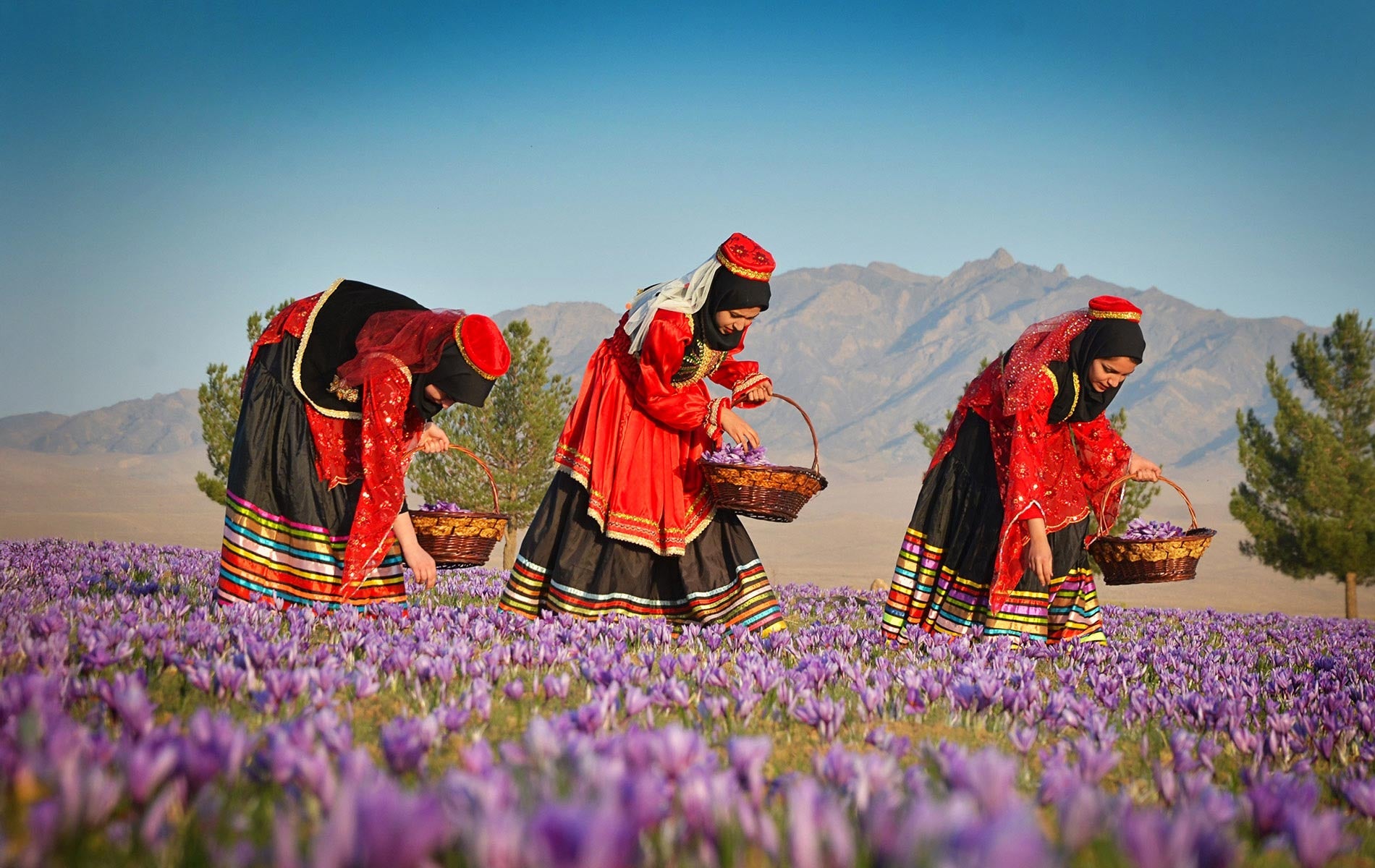
There's a reason saffron is called "red gold." Gram for gram, it's the most expensive spice in the world, and the price isn't about hype. It comes from the way saffron is grown and gathered, an astonishingly delicate, entirely handmade process that can't be rushed or automated. Once you understand how those crimson threads reach your kitchen, that little pinch feels a lot more precious.
Here's how saffron is harvested, and why it's worth every strand.
It all comes from one small flower
Saffron isn't a plant you simply grow and grind. It comes from the crocus flower, a small purple bloom, and the part we use is tiny: just three thread like crimson stigmas tucked inside each flower. That's it. Three threads per flower, and nothing else on the plant makes the cut.
To put that in perspective:
- Each flower gives only three usable threads
- It takes many thousands of flowers to make a single ounce of saffron
- A pound can require hundreds of thousands of blooms, all picked one by one
A race against the clock
Saffron flowers don't wait around. They bloom for only a short window each autumn, and each blossom lasts barely a day or two before it wilts. That means the entire harvest happens in a brief, intense stretch, often just a few weeks a year.
To protect the delicate flowers, they're picked in the cool early morning, before the sun opens them fully and the heat can damage the fragile threads inside.

Why it has to be done by hand
This is the heart of it. No machine can do this work. The flowers are too soft, the threads too fine, and the timing too precise for anything but careful human hands.
Every single step is manual:
- Picking each flower gently from the field, one at a time
- Separating the three red threads from the rest of the bloom, by hand, indoors
- Drying the threads carefully to lock in their color, aroma, and flavor
A skilled worker might process thousands of flowers to gather just a small handful of dried saffron. The labor behind even a tiny jar is enormous.
Why all of this matters to you
The hand harvest isn't just a nice story. It directly shapes what you get:
- It explains the price. You're paying for painstaking human labor, not a mark up
- It signals quality. Careful hand picking and drying protect the flavor and color that make saffron special
- It rewards buying real saffron. Because the work is so costly, cheap "saffron" is often padded or faked, so genuine threads are worth seeking out
- It's why a little goes a long way. Every thread is precious, so a small pinch is meant to do a lot
The bottom line
Saffron is expensive because it is, quite literally, handmade. From a short autumn bloom to threads plucked and dried one by one, every strand passes through human hands before it reaches your plate. Knowing that, it's easier to appreciate why real saffron costs what it does, and why a single glowing pinch is something to savour.
Eupherbia Saffron brings you deep red, carefully hand harvested threads with the rich color, floral aroma, and bold flavor that only real saffron delivers. A single pinch is all it takes to turn an everyday dish into something golden.
Share:
Saffron Grades Explained: All-Red Threads vs. Mixed
Discover the Power of Saffron Green Tea: A Premium Wellness Beverage